Conventional or Non-Toxic? How to Tell What Is Really in the Bottle
Every bottle in the cleaning aisle claims to be safe and fresh. Here is how we read past the front label and decide what actually earns a place in a home.
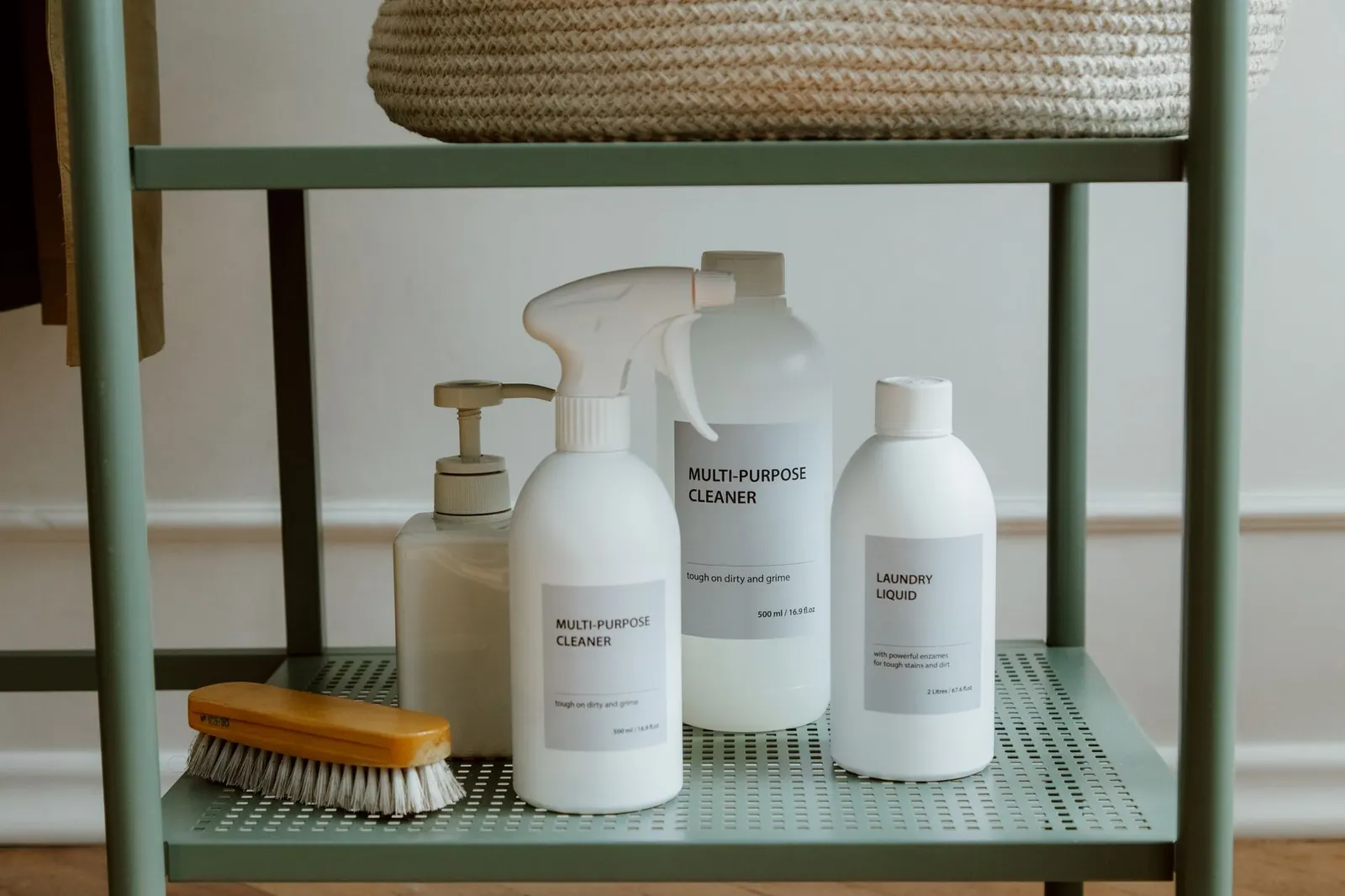
Stand in the cleaning aisle for five minutes and every bottle will tell you it is safe, powerful, fresh, and somehow also green. The front of a package is a promise written by a marketing team. The back, the small print where the ingredients and warnings live, is where the honest conversation happens. At BA Organization we read the back first, always, because whatever we carry through a client's door ends up on her counters, in her air, and on the floors where her children play. Here is how we tell a conventional cleaner from a truly non-toxic one, and how you can do the same on your next grocery run.
Two Stories on One Bottle
Every cleaning product tells two stories. The front tells the aspirational one: mountain air, lemon groves, a kitchen that glows. Words like fresh, pure, and gentle are chosen to make you feel something, and most of them have no enforced definition behind them. The second story is the ingredient list and the warning panel, written with regulators and chemists in mind, and that is the one worth your attention. A brand that names every ingredient plainly, including what makes up its scent, is showing you respect. A brand that hides behind vague terms is asking you to trust the picture instead of the recipe.
Three Red Flags We Take Seriously
The first is the word fragrance, sometimes written as parfum. In the United States, that single word can legally stand in for an entire blend of undisclosed scent chemicals, because fragrance formulas are treated as trade secrets. You cannot evaluate what you cannot see, so an unexplained fragrance is an automatic no for us. A trustworthy label names its scent sources, usually specific essential oils.
The second is the warning language itself. Disinfectants are regulated as pesticides in the United States, and the EPA assigns each one a signal word based on toxicity testing: CAUTION for the mildest tier, WARNING for moderate toxicity, and DANGER for the most toxic products of all. Other household chemicals carry similar required warnings under federal labeling law. Those words are never decoration. When a bottle says DANGER and instructs you to wear gloves and open a window, believe it, and notice what that means in reverse: some of the gentlest products on the shelf carry no signal word at all.
The third is the whole category of plug-ins, sprays, and beads sold as air fresheners. These products clean nothing; they release scent chemicals into your air so the room smells like something happened. In our work, the goal is a home that carries no scent at all, simply clean and neutral. Open a window instead. It works beautifully and it is free.

Why Green on the Label Guarantees Nothing
Now for the uncomfortable part. A leaf on the label, a kraft-paper texture, the words green, eco, plant-powered, or natural: none of it proves anything on its own. There is no single legal definition a cleaning product must satisfy before printing those words, which is exactly why greenwashing works so well. The Federal Trade Commission publishes guidance on environmental marketing claims, but the cleaning aisle moves faster than enforcement ever will. So we hold every product to the same test no matter how earthy the packaging looks: full ingredient disclosure, no unexplained fragrance, no harsh warning language, and ingredients we recognize and can explain to a client without hesitation.
How a Product Earns Its Way Into Your Home
Before anything rides in our caddy, we read the complete ingredient list, check how the brand discloses its scents, and test it on real surfaces in real homes, because a gentle formula that cannot cut kitchen grease solves nothing either. This is the standard behind our wellness cleaning service, and the same standard we teach clients who want to replace what lives under their own sink one bottle at a time. Start with whatever runs out next, turn the replacement around before you buy it, and let the honest bottle win.
You do not need a chemistry degree, just a new habit of reading in the right order: back first, front second. And if you would rather have a second set of eyes on your cleaning cabinet, we are happy to walk through it with you. Some of our favorite conversations with clients begin under the kitchen sink.