
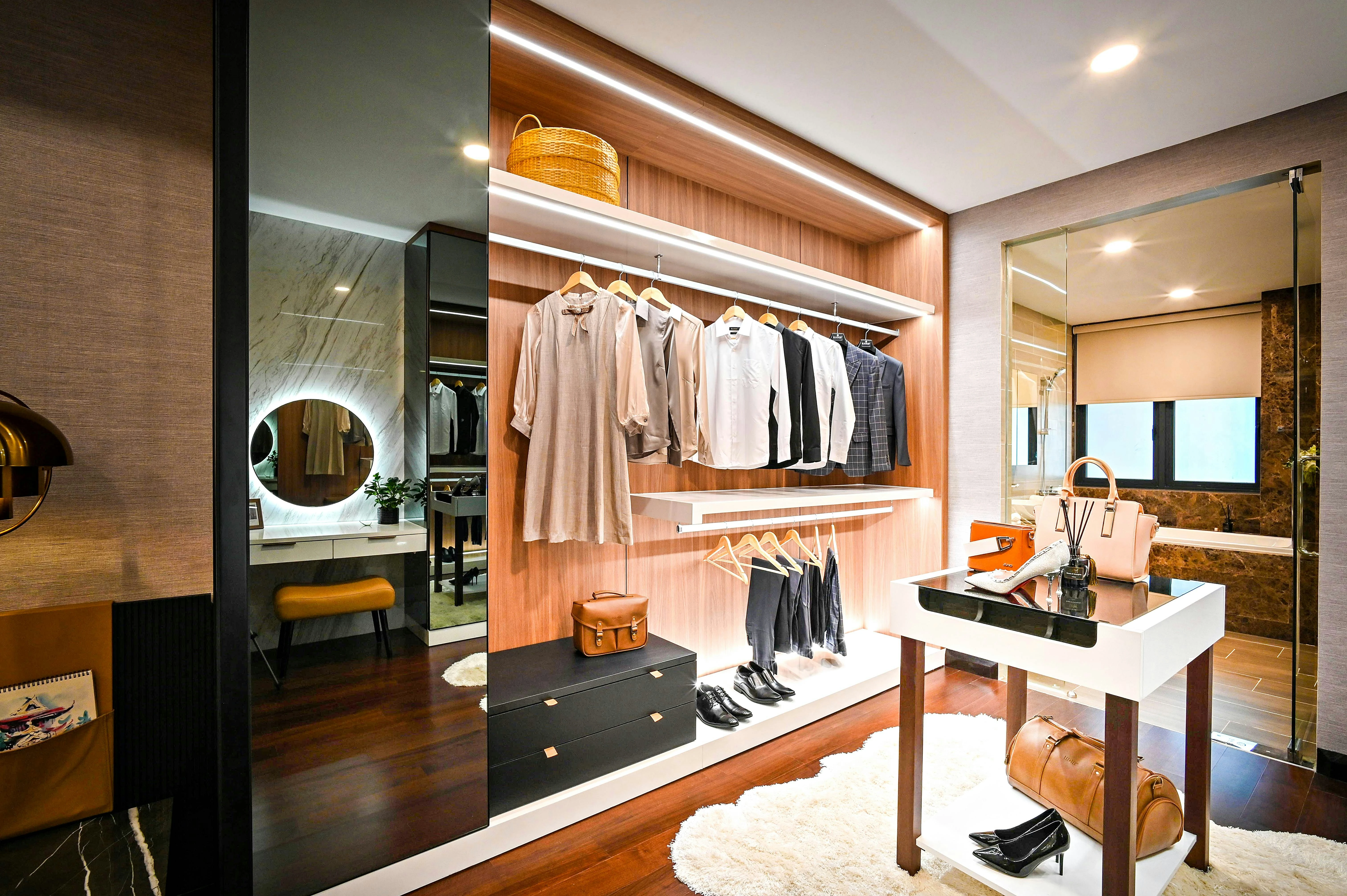
How to Organize a Closet That Actually Stays Organized
A closet does not stay organized because you worked hard on it once. It stays organized because the system behind it fits the way you actually live.
You have organized your closet before. Maybe more than once. The bins were labeled, the hangers matched, and for a couple of glorious weeks it looked like a boutique. Then life happened, and the piles crept back. Here is the truth I share with every client: a closet does not stay organized because you worked hard on it once. It stays organized because the system behind it fits the way you actually live. That is the difference between tidying and organizing, and it is the difference this guide is about.
Start With the Edit, Not the Bins
The most common mistake I see is shopping for organizing products first. Baskets and dividers are the finishing touch, not the foundation. Before anything else, take everything out. Yes, everything. Touch each piece and ask three honest questions. Do I wear this? Does it fit the person I am today? Would I buy it again? If the answer is no, thank it and let it go.
An edited closet is a lighter closet, and a lighter closet is far easier to maintain. When every hanger holds something you love, getting dressed stops being a negotiation and starts being a quiet pleasure. This is also the moment to release the guilt pieces: the impulse buys, the almost fits, the someday outfits. Your closet should tell the story of who you are, not of who you once thought you might become.
Categorize by How You Actually Dress
Once you are down to the pieces you truly wear, group them the way your mornings work, not the way a magazine says they should. If you reach for workout clothes at dawn, they belong at eye level. If you dress for work first, your workwear earns the prime real estate. Within each category, arrange by type and then by color. The color part is not only for beauty. When items live in a predictable order, your eye finds them instantly, and just as important, your hand knows exactly where to return them.
Keep your categories broad enough to survive real life. A drawer labeled simply as loungewear will stay tidy far longer than five tiny compartments that nobody has the patience to sort on a Tuesday night. Systems must be intuitive to be sustainable. If a category requires a decision tree, it will be abandoned by Friday.
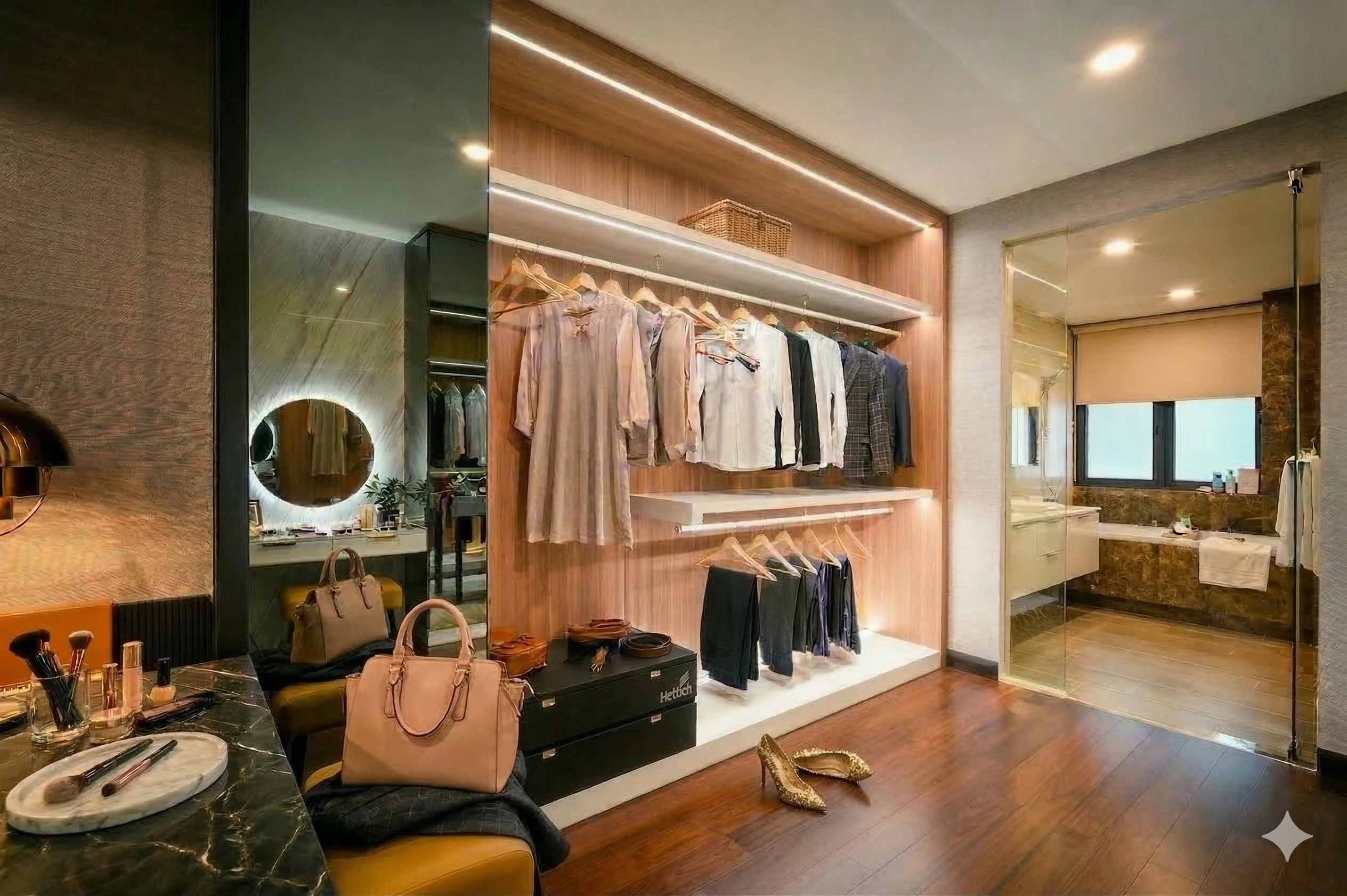
Give Every Item a Home It Can Return To
Order collapses at the point of return, not the point of use. Anyone can pull a sweater off a shelf. The question is whether the shelf makes it easy to put that sweater back. A shelf packed to the brim has no room to receive anything, so the floor quietly becomes the storage. Build in breathing room instead. I like to leave visible empty space in every zone, because that space is what absorbs real life between resets.
This is also where a simple rule earns its keep: one in, one out. When something new comes home, something else moves on. The rule protects the breathing room you worked so hard to create, and it turns shopping into a more intentional act, which is a lovely side effect.
The Ten-Minute Reset That Keeps It Beautiful
No system survives without a habit attached to it. Ours is the ten-minute reset: once a week, return the strays, straighten the stacks, and rehang anything draped over the chair. Ten minutes is short enough that you will actually do it, and often enough that chaos never gets a foothold. This is exactly why the final step of our process is education. We never just leave you with a pretty closet. We walk you through the system, so every member of the family knows where things belong and the order maintains itself.
A Closet Is Part of a Healthy Home
An organized closet is not only calmer to look at. It is easier to dust, simpler to air out, and kinder to your clothes and to the people who wear them. Clear floors and uncrowded shelves mean surfaces can actually be cleaned instead of shuffled around. It is one of the reasons we pair organization with wellness cleaning: a space that is both ordered and truly clean is what lets a home support your family's health instead of quietly working against it.
Start with the edit, build categories around your real routines, protect your breathing room, and guard it all with one small weekly habit. That is the whole secret. Clear spaces, calm minds, intentional living: it begins behind a closet door.